Directory » OI-MAN KWOK

 718G
718G
 458-1407

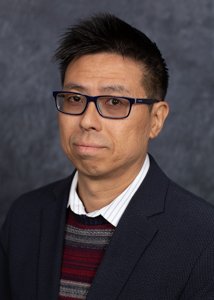
Oi-Man Kwok received his Ph.D. in 2005 from Arizona State University. He is a Professor of the Educational Psychology department (Research, Measurement, and Statistics program) at Texas A&M University. His research interests include examining the methodological issues of both multilevel models and structural equation models, and the applications of these models in different educational and psychological research. He has coauthored more than 80 peer-reviewed journal articles. He has also been extensively involving in federally funded projects with a total funding (including both ongoing and completed projects) over 10 million dollars. Dr. Kwok received the Outstanding New Faculty Award from the College of Education & Human Development (CEHD) in 2007, and was selected as the Yates Faculty Fellow of CEHD in 2009. He has also served as the chair of the American Educational Research Association (AERA) Multilevel Modeling Special Interest Group (MLM-SIG) from 2012 to 2013.
Dr. Kwok teaches graduate level research and educational statistics courses. He has been recognized for his outstanding teaching with the 2010 Teaching Excellence Award from the Texas A&M University System. He has also been very active in mentoring graduate students and has graduated more than ten of his own doctoral students with a PhD; seven of them currently hold faculty positions at US or international universities. He is now chairing 5 doctoral students and has served on more than 50 doctoral committees (39 of them have completed their PhDs) within and outside of CEHD (e.g., Accounting, Architecture, Communication, Management, Psychology, and Sociology).
Dr. Kwok teaches graduate level research and educational statistics courses. He has been recognized for his outstanding teaching with the 2010 Teaching Excellence Award from the Texas A&M University System. He has also been very active in mentoring graduate students and has graduated more than ten of his own doctoral students with a PhD; seven of them currently hold faculty positions at US or international universities. He is now chairing 5 doctoral students and has served on more than 50 doctoral committees (39 of them have completed their PhDs) within and outside of CEHD (e.g., Accounting, Architecture, Communication, Management, Psychology, and Sociology).
Education
Ph.D., Quantitative Psychology, Arizona State University (2004)
M.Ph., Psychology, The Chinese University of Hong Kong (1998)
B.S., Psychology, National Taiwan University (1995)
COURSES TAUGHT
EPSY636. TECHNIQUES OF RESEARCH
2015C,2014C
EPSY640. STAT ANALYSIS ED RESEARCH I
2020A
EPSY651. Theory Of Struct Eq Mod
2008C,2007C
EPSY651. THEORY OF STRUCT EQ MOD
2020B,2019A,2018C,2017A,2016A
EPSY652. Theory Of Hlm
2009A
EPSY652. THEORY OF HLM
2020C,2020B,2019C,2019B,2017A
EPSY653. ADVANCED STRUC EQU MODEL
2020C,2019C,2017C,2016C,2015C
EPSY682.
2006A
EPSY683. FIELD PRACTICUM IN
2019C,2018B,2017A
EPSY684. Profess Internship
2009B,2009A
EPSY684. PROFESS INTERNSHIP
2020C,2020B,2020A
EPSY685. Directed Studies
2009A,2008C,2008A,2007A,2006C
EPSY689. Special Topics In Theory Hierch Lnr Mdl
2008A
EPSY690. Theory Of Strct Eqtn Model
2005C
EPSY690. Theory Of Strct Eqtn Mdl I
2006C
EPSY690. Theory Of Hierarch Lnr Mod
2007A,2006A
EPSY690. Theory Advanced Strct Eqtn Mdl
2008C,2007C
FORMER DOCTORAL STUDENTS
Yuhong Ji (Summer 2020)
Maria Antoun Henri (Fall 2018)
Yun Li (Fall 2018)
Alyce Janine Odasso (Summer 2017)
Yu-Yu Hsiao (Summer 2017)
Qian Cao (Fall 2016)
Leina Zhu (Fall 2015)
Hok Lai (Summer 2015)
Myung Hee Im (Summer 2014)
Qiong Zhou (Summer 2013)
Min Jung Kim (Spring 2012)
Jiun-Yu Wu (Summer 2010)
Yuan-Hsuan Lee (Summer 2010)
Hsien-Yuan Hsu (Fall 2009)
Yuanyuan Zou (Summer 2009)
Qi Chen (Summer 2008)
Wen Luo (Summer 2007)
SELECTED PUBLICATIONS
Books and Monographs
Kwok, O., *Im, M., Hughes, J. N., Wehrly, S. E., & West, S. G. (2016). Testing statistical moderation in research on home-school partnerships: Establishing the boundary conditions. In S. M. Sheridan & E. M. Kim (Eds.), Research on Family-School Partnerships: An Interdisciplinary Examination of State of the Science and Critical Needs (Volume III: Family-School Partnerships in Context) (pp.79-107). New York, NY: Springer.
Journal Articles
Chen, L.S., Yeh, Y., Goodson, P., Zhao, S., Jung, E., Muenzenberger, A., Kwok, O., Ma, P. (2019). Training Texas public health professionals and professionals-in-training in genomics. American Journal of Health Promotion, 33, 1159-1165. [ISI 2018 impact factor: 2.636]
Clemens, N. H., *Hsiao, Y., Simmons, L., Kwok, O., Greene, E., Soohoo, M., *Henri, M., *Luo, W., Alotaiba, S., & Rivas, B. (2019). The predictive validity of kindergarten progress monitoring measures across the school year: An application of dominance analysis. Assessment for Effective Intervention, 44, 241-255. [SJR 2018 impact factor: 0.730]
Clemens, N. H., Oslund, E., Kwok, O., Fogarty, M., Simmons, D., & Davis, J. L. (2019). Skill moderators of the effects of a reading comprehension intervention. Exceptional Children, 85, 197-211. [ISI 2018 impact factor: 2.854]
Elliott, T. R., *Hsiao, Y.[48]13Y., Kimbrel, N. A., DeBeer, B. B., Gulliver, S. B., Kwok, O., Morissette, S. B., & Meyer, E. C. (2019). Resilience facilitates adjustment through greater psychological flexibility among Iraq/Afghanistan war veterans with and without mild traumatic brain injury. Rehabilitation Psychology, 64, 383-397. [ISI 2018 impact factor: 1.392]
*Yeh, Y.-C., Kwok, O., *Chien, H.-Y., Sweany, N.W., Baek, E., & McIntosh, W.A. (2019). How college students[48]19 achievement goal orientations predict their expected online learning outcome: The mediation roles of self-regulated learning strategies and supportive online learning behaviors. Online Learning Journal, 23(4), 23-41. doi:10.24059/olj.v23i4.2076 [SJR 2018 impact factor: 0.550]
Yeh, Y.-L., Li, M., Kwok, O., & Chen, L.-S. (2019). Family health history of colorectal cancer: A structural equation model of factors influencing Chinese Americans[48]19 communication with family members. Translational Cancer Research, 8(Suppl4), S355-S365. [ISI 2018 impact factor: 1.070]
Zhao, S., Chen, W.J ., Dhar. S.U., Eble, T.N, Kwok O., & Chen, L.S. (2019). Genetic testing experiences among parents of children with autism spectrum disorders in the United States. Journal of Autism and Developmental Disorders, 49, 4821-4833. [ISI 2018 impact factor: 2.786] indexed in SCOPUS
Zhao, S., Chen, W.-J., Dhar, S. U., Eble, T. N., Kwok, O., Chen, L. S. (2019). Needs assessment in genetic testing education: A survey of parents of children with autism spectrum disorder in the United States. Autism Research, 12, 1162-1170. [ISI 2018 impact factor: 3.697] indexed in SCOPUS
Brocato, B. & Kwok, O. (2018). Competing institutional logics and teaching effectiveness in traditional and online university classrooms. The Journal of Public and Professional Sociology, 10(1):5. [ISI 2017 impact factor: N/A]
Chen, L, Zhao, S., Stelzig, D., Dhar, S., Eble, T., *Yeh, Y., & Kwok, O. (2018). Development and evaluation of a genomics training program for community health workers in Texas. Genetics in Medicine, 20, 1030-1037. [ISI 2017 impact factor: 9.937]
Gagne, J. R., *Chang, C., Fang, H., Spann, C., & Kwok, O. (2018). A multimethod study of inhibitory control and behavioral problems in preschoolers. Infant and Child Development, 2018;e2115. [ISI 2017 impact factor: 1.289]
*Hsiao, Y., Kwok, O., *Lai, M. H. C. (2018). Evaluation of two methods for modeling measurement errors when testing interaction effects with observed composite scores. Educational and Psychological Measurement. 78, 181-202. [ISI 2017 impact factor: 1.663]
*Kim, M., *Hsu, H., Kwok, O., & Seo, S. (2018). The optimal starting model to search for the accurate growth trajectory in latent growth models. Frontiers in Psychology (Quantitative Psychology and Measurement), 9:349. [ISI 2017 impact factor: 2.089]
*Lai, M. H. C., Kwok, O., *Hsiao, Y., & *Qian, C. (2018). Finite population correction for two-level hierarchical linear models. Psychological Methods. 23, 94-112. [ISI 2017 impact factor: 6.485]
Meyer, E. C., Walser, R., Hermann, B., La Bash, H., DeBeer, B. B., Morissette, S. B., Kimbrel, N. A., Kwok, O., Batten, S. V., & Schnurr, P. P. (2018). Acceptance and commitment therapy for co-occurring posttraumatic stress disorder and alcohol use disorders in veterans: Pilot treatment outcomes. Journal of Traumatic Stress, 31, 781-789. [ISI 2017 impact factor: 2.456]
Pollard-Durodola, S. D., Gonzalez, J. E., Saenz, L. M., Resendez, N., Kwok, O., *Zhu, L., & Davis, H. (2018). The effects of content-enriched shared book reading versus vocabulary-only discussions on the vocabulary outcomes of preschool dual language learners. Early Education and Development, 29, 245-265. [ISI 2017 impact factor: 1.370]
Elliott, T., *Hsiao, Y. Y., Kimbrel, N., Meyer, E., DeBeer, B., Gulliver, S. B., Kwok, O., & Morissette, S. B. (2017). Resilience and traumatic brain injury among Iraq/Afghanistan war veterans; Differential patterns of adjustment and quality of life. Journal of Clinical Psychology, 73, 1160-1178. [ISI 2016 impact factor: 2.123]
Fogarty, M., Clemens, N., Simmons, D., Anderson, L., Davis, J., Smith, A., *Wang, H., Kwok, O., Simmons, L. E., & Oslund, E. (2017). Impact of a technology-mediated reading intervention on adolescents[48]19 reading comprehension. Journal of Research on Educational Effectiveness, 10, 326-353. [ISI 2016 impact factor: 1.310]
*Lai, M. H. C., Kwok, O., Yoon, M., & *Hsiao, Y. (2017). Understanding the impact of partial factorial invariance on selection accuracy: An R script. Structural Equation Modeling: A Multidisciplinary Journal, 24, 783[48]13799. [ISI 2016 impact factor: 3.097]
Oslund, E. L., Hagan-Burke, S., Simmons, D. C., Clemens, N. H., Simmons, L. E., Taylor, A, Kwok, O., & Coyne, M. D. (2017). The predictive validity of curriculum-embedded measures on outcomes of kindergarteners identified as at-risk of reading difficulty. Journal of Learning Disabilities, 50, 712[48]13723. [ISI 2016 impact factor: 1.494]
Blake, J. J., Kim, E. S., Lund, E.M., *Zhou, Q., Kwok, O., & Benz, M. R. (2016). Predictors of bully victimization in students with disabilities: A longitudinal examination using a national dataset. Journal of Disability Policy Studies, 26, 199-208. doi:10.1177/1044207314539012 [ISI 2015 impact factor: .533]
Hagan-Burke, S., Soares, D. A., Gonzalez, J. E., *Zhu, L., Davis, H. S., Kwok, O., Pollard-Durodolla, S. D., Saenz, L. M., Resendez, N. M. (2016). Associations between problem behaviors and vocabulary skills among Hispanic dual-language learners in pre-K. Topics in Early Childhood Special Education, 36, 91-102. [ISI 2015 impact factor: 1.143]
Hsu, H-Y., Lin, J-H., Kwok, O., Acosta, S., & Willson, V. (2016). The impact of intra-class correlation (ICC) on the effectiveness of level-specific fit indices in multilevel structural equation modeling (MSEM): A Monte Carlo study. Educational and Psychological Measurement. Online first: Advance online publication. doi:10.1080/10810730.2015.1066467 (Impact Factor, 2014: 1.154)
Hughes, J. N., *Cao, Q., & Kwok, O. M. (2016). Indirect Effects of Extracurricular Participation on Academic Adjustment via Perceived Friends' Prosocial Norms. Journal of Youth and Adolescence, 45, 2260-2277. [ISI 2015 impact factor: 3.562]
*Im, M., Hughes, J. N., *Cao, Q., & Kwok, O. M. (2016). Effects of Extracurricular Participation during Middle School on Academic Motivation and Achievement at Grade 9. American Educational Research Journal, 53, 1343-1375. [ISI 2015 impact factor: 2.924]
*Im, M., Kim, E. S., Kwok, O., Yoon, M., & Willson, V. L. (2016). Impact of not addressing partially cross-classified multilevel structure in testing measurement invariance: A Monte Carlo study. Frontiers in Psychology, 7:328. doi: 10.3389/fpsyg.2016.00328
*Kim, M., Kwok, O., Yoon, M., Willson, V. L., & *Lai, M. H. C. (2016). Specification search for identifying the correct mean trajectory in latent growth models: A Monte Carlo study. The Journal of Experimental Education, 84, 307- 329. [ISI 2015 impact factor: 1.638]
*Lai, M. H. C., & Kwok, O. (2016). Standardized mean differences in two-level partially nested models. Multivariate Behavioral Research, 51, 740-756. [ISI 2015 impact factor: 1.551]
Pollard-Durodola, S. D., Gonzalez, J. E., Saenz, L. M., Soares, D.A., Resendez, N., Kwok, O., Davis, H, & *Zhu, L. (2016). The effects of content-related shared book reading instruction on the language, literacy, and conceptual knowledge development of emergent bilinguals. Early Childhood Research Quarterly., 36, 106-121. [ISI 2015 impact factor: 1.730]
Chen, L.S., Goodson, P., Jung, E., Popoola, O., Kwok, O.M., Muenzenberger, A. (2015). A survey of Texas Health Educators[48]19 family health history-based practice. Am J Health Behav 39(5): 632-639.
Elliott, T. R., Hsiao, Y. Y., Kimbrel, N., Meyer, E., DeBeer, B., Gulliver, S., Kwok, O. M., & Morrisette, S. (2015). Resilience, traumatic brain injury, depression and posttraumatic stress among Iraq/Afghanistan war veterans. Rehabilitation Psychology, 60, 263-276. 2014 Impact factor = 1.84
*Hsu, H-Y., Kwok, O., Acosta, S., & Lin, J-H. (2015). Detecting misspecified multilevel SEMs using common fit indices: A Monte Carlo study. Multivariate Behavioral Research, 50, 197-215. [ISI 2014 impact factor: 2.477]
Hughes, J. N., *Im, M., Kwok, O., Cham, H., & West, S. G. (2015). Latino students[48]19 transition to middle school: Role of bilingual education and school ethnic context. Journal of Research on Adolescence, 25, 443-458.
Kim, E., Yoon, M., *Luo, W., Yao, W., & Kwok, O. (2015). Within-level group factorial invariance in multilevel data: Multilevel factor mixture and multilevel MIMIC models. Structural Equation Modeling: A Multidisciplinary Journal, 22, 603-616
*Lai, M. H. C., & Kwok, O. (2015). Examining the rule of thumb of not using multilevel modeling: The [48]1CDesign effect smaller than two[48]1D rule. The Journal of Experimental Education, 83, 423-438. [ISI 2014 impact factor: 1.087]
Oslund, E.L., Simmons, D.C, Hagan-Burke, S., Simmons, L.E., Coyne, M.D., Kwok, O., & Taylor, A. (2015). Can curriculum-embedded measures predict the later reading achievement of kindergarteners at risk of reading disability? Learning Disability Quarterly, 38, 3-14. [5-yr IF: 1.440]
Simmons, D. C., Kim, M., Kwok, O., Coyne, M. D., Simmons, L. E., Oslund, E., Fogarty, M., Hagan-Burke, S., Little, M. E., & Rawlinson, D. (2015). Examining the Effects of Linking Student Performance and Progression in a Tier 2 Kindergarten Reading Intervention. Journal of Learning Disabilities, 48, 255-270
Burke, M. D., Davis, J., Hagan-Burke, S., Lee, Y., Kwok, O., & Fogarty, M. (2014). Universal screening for social behavior risk in middle school using SWPBS expectations. Journal of Positive Behavior Interventions, 16, 5-17
Chen, L. S., Goodson, P, Jung, E., Muenzenberger, A., Xu, L., Kwok, O., Li, M. (2014). Effectiveness of a Genomics Web-based training for health educators in Texas. Genetics in Medicine, 16, 271[8211]278 [ISI 2014 impact factor: 7.329]
*Chen, Q., Hughes, J. N. & Kwok, O. (2014). Differential growth trajectories for achievement among children retained in first grade: A growth mixture model. The Elementary School Journal, 114, 327[8211]353. [ISI 2014 impact factor: 1.083]
Hughes, J. N., *Im, M., Cham, H., Kwok, O.M., & West, S.G. (2014). Latino students[48]19 school engagement at the transition to middle school: Role of bilingual education and school ethnic context. Journal of Research on Adolescence. Early View published on-line April 22, 2014. DOI: 10.1111/jora.12142
*Lai, M. H .C., & Kwok, O. (2014). Standardized mean differences in two-level cross-classified random effect models. Journal of Educational and Behavioral Statistics, 39, 282[48]13302. [ISI 2013 impact factor: .1.016]
Liew, J., Kwok, O., Chang, Y., Chang, B. W., and Yeh, Y. (2014). Parental autonomy support predicts academic achievement through emotion-related self-regulation and adaptive skills in Chinese American adolescents. Asian American Journal of Psychology, 5, 214-222.
Liew, J., Lench, H. C., Kao, G., Yeh, Y., & Kwok, O. (2014). Avoidance temperament and social-evaluative threat in college students[48]19 math performance: A mediation model of math and test anxiety. Anxiety, Stress, & Coping, 27, 650[48]13661. [ISI 2013 impact factor: 1.692]
*Wu, J., *Lee, Y., Kwok, O., & Willson, V. L. (2014). Using design-based latent growth curve modeling with cluster-level predictors to address dependency. Journal of Experimental Education, 82, 431[48]13454. [ISI 2013 impact factor: .720
Blake, J.J., Lund, E.M., Qiong, Z., Kwok, O., & Benz, M.R. (2013). National prevalence rates of bully victimization among students with disabilities in the United States. School Psychology Quarterly, 27, 210-222
Bowman-Perrott, L., Benz, M. R., *Hsu, H., Kwok, O., *Eisterhold, L., & Zhang, D. (2013).Patterns and predictors of disciplinary exclusion over time: An analysis of the SEELS National dataset. Journal of Emotional and Behavioral Disorders, 21(2), 83-96. (Published online first October 13, 2011.)
Chen LS, Goodson P, Jung E, Muenzenberger A, Xu L, Kwok OM, Li M (2013). Effectiveness of a Web-based genomics training for health educators in Texas. Genetics in Medicine
Coyne, M. D., Little, M. E., Rawlinson, D. M., Simmons, D. C., Kwok, O., *Kim, M, Simmons, L. E., Hagan-Burke, S., & Civetelli, C. (2013). Replicating the impact of a supplemental beginning reading intervention: The role of instructional context. Journal of Research on Educational Effectiveness, 6, 1-23
Coyne, M. D., Simmons, D., Hagan-Burke, S., Simmons, L. E., Kwok, O., *Kim, M., Fogarty, M., Oslund, E., Taylor, A., Capozzoli-Oldham, A., Ware, S., Little, M. E., & Rawlinson, D. M. (2013). Adjusting beginning reading intervention based on student performance: An experimental evaluation. Exceptional Children, 80, 25-44
Duran, J., *Zhou, Q., Frew, L., Kwok, O., & Benz, M.R. (2013). Disciplinary exclusion and students with disabilities: The mediating role of social skills. Journal of Disability Policy Studies, 24, 15-26. [ISI 2013 impact factor: 1.095]
Frew, L., *Zhou, Q., Duran, J., Kwok, O., & Benz, M.R. (2013). Effect of school-initiated parent outreach activities on parent involvement in school events. Journal of Disability Policy Studies, 24, 27-35. [ISI 2013 impact factor: 1.095]
Hagan-Burke, S., Coyne, M. D., Kwok, O., Simmons, D. C., Kim, M., Simmons, L. E., Skidmore, S. T., Hernandez, C. L., & Ruby, M. M. (2013). Effects and interactions of student, teacher, and setting variables on reading outcomes for kindergarteners receiving supplemental reading instruction. Journal of Learning Disabilities. 46, 260-277.
Hughes, J. N., Kwok, O., & *Im, M. (2013). Effect of retention in first grade on parents educational expectations and children[48]19s academic outcomes. American Educational Research Journal, 50, 1336-1359
*Im, M. H., Hughes, J. N., Kwok, O. M., *Puckett, S., & *Cerda, C. (2013) Effect of retention in elementary grades on transition to middle school. Journal of School Psychology
Merchant, Z., Goetz, E., Keeney-Kennicutt, W., Kwok, O., Cifuentes, L., & Davis, T, J. (2013). Exploring 3-D virtual reality technology for spatial ability and chemistry achievement, Journal of Computer Assisted Learning, 29, 579-590
Simmons, D. C., *Kim, M., Kwok, O., Coyne, M. D., Simmons, L. E., *Oslund, E., *Fogarty, M., Hagan-Burke, S., Little, M. E., & Rawlinson, D. (2013). Examining the effects of linking student performance and progression in a tier 2 kindergarten reading intervention. Journal of Learning Disabilities.
Simmons, D. C., Taylor, A. B., *Oslund, E. L., Simmons, L. E., Coyne, M. D., Little, M. E., Rawlinson, D. M., Hagan-Burke, S., Kwok, O., & Kim, M. (2013). Predictors of at-risk kindergarteners[8217] later reading difficulty: Examining learner-by-intervention interactions. Reading and Writing: An Interdisciplinary Journal. Advance online publication. doi:10.1007/s11145-013-9452-5
Blake, J. J., Lund, E. M., *Zhou, Q., Kwok, O., & Benz, M. R. (2012). National prevalence rates of bully victimization among students with disabilities in the United States. School Psychology Quarterly, 27, 210-222
Burke, M. D., Davis, J., Lee, Y., Hagan-Burke, S., Kwok, O., & Sugai, G. (2012). Universal screening for behavioral risk in elementary schools using SWPBS Expectations. Journal of Emotional and Behavioral Disorders, 20, (1) 38-54
Hughes, J. N., Wu, Jerry, Kwok, O., Villarreal, V., & Johnson, A.Y.( 2012). Indirect effects of child reports of teacher-student relationship on achievement. Journal of Educational Psychology, 104, 350-365
Keller-Margolis, M., Clemens, N.H., *Im, M., Kwok, O., & Booth, C. (2012). Differential rates of student growth on reading curriculum-based measurement in a diverse sample. Learning and Individual Differences, 22, 799-805
Keller-Margulis, M. A., Clemens, N. H., *Im, M., Kwok, O., & Booth, C. (2012). Curriculum-based measurement yearly growth rates: An examination of English language learners and native English speakers. Learning and Individual Differences, 22, 799-805
Kim, E., [020]Kwok, O., & Yoon, M. (2012). Testing factorial invariance in multilevel data: A Monte Carlo study. Structural Equation Modeling, 19, 250-267
Kim, E., [8224]Kwok, O., & Yoon, M. (2012). Testing factorial invariance in multilevel data: A Monte Carlo study. Structural Equation Modeling, 19, 250- 267
Kim, E., Kwok, O., & Yoon, M. (2012). Testing factorial invariance in multilevel data: A Monte Carlo study. Structural Equation Modeling, 19, 250-267. [ISI 2012 impact factor: 4.240]
Little, M. E., Rawlinson, D., Simmons, D. C., Kim, M., Kwok, O., Hagan-Burke, S., Simmons, L. E., *Fogarty, M., *Oslund, E., & Coyne, M. D. (2012). A comparison of responsive interventions on kindergarteners' early reading achievement. Learning Disabilities Research and Practice, 27, 189-202
Li, Y., Hughes, J. N., Kwok, O., & *Hsu, H. (2012). Evidence of convergent and discriminant validity of child, teacher, and peer reports of teacher-student relationship support. Psychological Assessment, 24, 54-65
*Luo, W., & [020]Kwok, O. (2012). The Consequences of Ignoring Individuals' Mobility in Multilevel Growth Models: A Monte Carlo Study. Journal of Educational and Behavioral Statistics, 37, 31-56
*Merchant, Z., Goetz, E., Keeney-Kennicutt, W., Kwok, O., Cifuentes, L., & Davis, T. J. (2012). The learner characteristics, features of desktop 3D virtual reality environments, and college chemistry instruction: A structural equation modeling analysis. Computers & Education, 59, 551- 568
Oslund, E. L., Hagan-Burke, S., Taylor, A. B., Simmons, D. C., *Simmons, L., Kwok, O., *Johnson, C., & Coyne, M. D. (2012). Predicting kindergarteners[8217] response to early reading intervention: An examination of progress-monitoring measures. Reading Psychology, 33, 78-103
Spilt, J. L., Hughes, J. N., *Wu, J., & Kwok, O. (2012). Dynamics of teacher-student relationships: Stability and change across elementary school and the influence on children's academic success. Child Development, 83, 1180-1195
Spilt, J. L., Hughes, J. N., Wu, J.Y., & Kwok, O (2012). Dynamics of teacher-student relationships: stability and change across elementary school and the influence on children[8217]s academic success. Child Development, 83, 1117-14630
*Wu, J., & [020]Kwok, O. (2012). Using structural equation modeling to analyze complex survey data: A comparison between design-based single-level and model-based multi-level approaches. Structural Equation Modeling, 19, 16-35
Bowman-Perrott, L., Benz, M.R., Hsu, H.Y., Kwok, O., Eisterhold, L.A., & Zhang, D. (2011). Patterns and predictors of disciplinary exclusion over time: An analysis of the SEELS national data set. Journal of Emotional and Behavioral Disorders
Hagan-Burke, S., Kwok, O., *Zou, Y., *Johnson, C., Simmons, D. C., & Coyne, M. D. An examination of problem behaviors and reading outcomes in kindergarten students. Journal of Special Education, 45, 131-148
*Hsu, H., Zhang, D., Kwok, O., & Li, Y. (2011). Distinguishing the influences of father and mother's involvement on adolescent academic achievement: Analyses of Taiwan Education Panel Survey data. Journal of Early Adolescence, 31, 694-714
Liew, J., Xiang, P., Johnson, A. Y.*, & Kwok, O. (2011). Effortful persistence and body mass as predictors of running achievement in children and youth: A longitudinal study. Journal of Physical Activity and Health, 8, 234-243
Li*, Y, Hughes, J. N., Kwok, O, & Hsu*, H. (2011). Evidence of convergent and divergent validity of child, teacher, and peer reports of teacher-student support. Psychological Assessment
Simmons, D. C., Coyne, M. D., Hagan-Burke, S., Kwok, O., Simmons, L.E, Johnson, C., Zou, Y., Taylor, A. B., McAlenney, A. L., Ruby, M., & Crevecoeur, Y. C. (2011). Effects of supplemental reading interventions in authentic contexts: A comparison of kindergarteners' response. Exceptional Children, 77, 207-228
West, S. G., Ryu, E., Kwok, O., & Cham, H. (2011). Multilevel modeling: Current and future applications in personality research. Journal of Personality, 79, 2-50
Zhang, D., Benz, M. R.., Kwok, O., *Hsu, H., Y., & Bowman-Perrott, L. (2011). The impact of basic-level parent engagements on student achievement: Patterns associated with race/ethnicity and SES. Journal of Disability Policy Studies, 22(1), 28-39
Zhu, X., Lee, C., Kwok, O., & Varni, J. (2011). Context-specific correlates of walking to school: Do they vary be neighborhoods and populations? Journal of Physical Activity and Health, 8 (Suppl 1), s59-s71
Burke, M. D., *Zou, Y. & Kwok, O. (2010). A structural equation model using sublexical fluency measures to predict emerging reading ability. Remedial and Special Education, 31, 385-399
*Chen, Q., Hughes, J. N., Liew, J., & Kwok, O. (2010). Joint contributions of peer acceptance and peer academic reputation to achievelment in academically at risk children: Mediating processes. Journal of Applied Developmental Psychology, 31, 448-459
*Chen, Q., Kwok, O., *Luo, W., & Willson, V. L. (2010). The impact of ignoring a level of nesting structure in multilevel growth mixture models: A Monte Carlo study. Structural Equation Modeling, 17, 570-589
Johnson, C. L., Resch, J. A., Villarreal, V., Elliott, T. R., Kwok, O., Berry, J. W., & Underhill, A. T. (2010). Family satisfaction predicts life satisfaction trajectories over the first five years after traumatic brain injury. Rehabilitation Psychology, 55, 180-187
Kwok, O., *Luo, W., & West, S. G. (2010). Using modification indices to detect turning points in longitudinal data: A Monte Carlo study. Structural Equation Modeling, 17, 216-240
*Luo, W., & Kwok, O. (2010). Proportional modeled variance in cross-classified random effects models. Sociological Methods and Research, 39, 188-205
Wu, J., Hughes, J. N. & Kwok, O. (2010). Teacher-student relationship quality type in elementary grades: Effects on trajectories for achievement and engagement. Journal of School Psychology, 48, 337-355
*Wu, J., Hughes, J, N., & Kwok, O. (2010). Teacher student relationships types in Grade 3: Effects on trajectories for achievement and engagement in grades 4-6. Journal of School Psychology, 48, 357-387
Zhang, D.D., Landmark, L.J., Reber, A., *Hsu, H., Kwok, O., & Benz, M. R. (2010). University faculty knowledge, beliefs, and practices in providing adequate services to students with disabilities. Remedial and Special Education, 31, 276-286
Burke, M. D., Hagan-Burke, S., Kwok, O., & Parker, R. (2009). Path Analysis of early literacy indicators from middle of kindergarten to end of second grade. Journal of Special Education, 42, 209-226
Burke, M.D., Hagan-Burke S., Kwok, O., & Parker, R. (2009). Predictive Validity of Early Literacy Indicators from Kindergarten to Second Grade. The Journal of Special Education.
Burke, M. D., Zou, Y., & Kwok, O. A. (2009). A structural equation model using sublexical fluency measures to predict emerging reading ability. Remedial and Special Education
Hughes, J. N., Dyer, N., *Luo, W., & Kwok, O. (2009). Effects of peer academic reputation on achievement in academically at-risk elementary students. Journal of Applied Developmental Psychology, 30, 182-194
Hughes, J. N., Dyer, N., Luo, W., & Kwok, O. (2009). Effects of peer academic reputation on achievement in academically at-risk elementary students. Journal of Applied Developmental Psychology, 30,182-194. PubMed ID: 19617931
Luo, W., Hughes, J., Liew, J., & Kwok, O. (2009). Classifying first grade children into engagement types: Association with long-term achievement trajectories. Elementary School Journal, 109, 380-405
Luo, W., Hughes, J. N., Kwok, O., & Liew, J. (2009). Classifying Academically At-Risk First Graders into Engagement Types: Association with Long-Term Achievement Trajectories. The Elementary School Journal, 109, 380-405
Resch, J. A., Villareal, V., Johnson, C., Elliott, T., Kwok, O., Berry, J., & Underhill, A. (2009). Trajectories of life satisfaction in the first five years following traumatic brain injury. Rehabilitation Psychology, 54, 51-59.
Chen, L., Kwok, O., & Goodson, P. (2008). Health Educators Likelihood of Adopting Genomic Competencies into Health Promotion: A Structural Equation Modeling Analysis. American Journal of Public Health, 98, 1651-1657.
Chen, L.S., Kwok O.M., Goodson, P. (2008). U.S. Health Educators' Likelihood of Adopting Genomic Competencies into Health Promotion. American Journal of Public Health, 98(9):1651-1657. (IS1 2007 impact factor: 3.61)
Hughes, J. N., Luo, W., Kwok, O., & Loyd, L. (2008). Teacher-student support, effortful engagement, and achievement: A 3-year longitudinal study. Journal of Educational Psychology, 100, 1-14.
Kwok, 0., Underhill, A,, Berry, J. W., Luo, W., Elliott, T., & Yoon, M. (2008). Analyzing longitudinal data with multilevel models: An example with individuals living with lower extremity intra-articular fractures. Rehabilitation Psychology, 53, 370-386.
Simmons, D., Coyne, M., Kwok, O., McDonagh, S, Harn, B., & Kame'enui, E. (2008). Indexing response to intervention: A longitudinal study of reading risk from kindergarten through third grade. Journal of Learning Disabilities, 41, 143-158.
Sousa, K. H., Kwok, O. & Ryu, E., & Cook, S. W. (2008). Confirmation of the validity of the HAQ-DI in two populations living with chronic illnesses. Journal of Nursing Measurement, 16, 31-42.
Tong, F., Lara-Alecio, R., Irby, B. J., Mathes, P., & Kwok, O. (2008). Accelerating early academic oral English development in transitional bilingual and structured English immersion programs. American Educational Research Journal, 45, 1011-1044.
Gleason, K.A., Kwok, O., & Hughes, J. N. (2007). The short-term effect of grade retention on peer relations and academic performance of at-risk first graders. The Elementary School Journal, 107, 327-340.
Hughes, J. N., & Kwok, O. (2007). The influence of student-teacher and parent-teacher relationships on lower achieving readers' engagement and achievement in the primary grades. Journal of Educational Psychology, 99, 39-51.
Kwok, O., Hughes, J. N., & Luo, W. (2007). Role of Resilient Personality on First Grade Students' Current and Future Achievement. Journal of School Psychology, 45, 61-82.
Kwok, O., West, S. G., & Green, S. B. (2007). The Impact of Misspecifying the Within-Subject Covariance Structure in Multiwave Longitudinal Multilevel Models: A Monte Carlo Study. Multivariate Behavioral Research,42, 557-592.
Sousa, K. H., Ryu, E., Kwok, O., Cook, S. W., & West, S. G. (2007). Development of a model to measure symptom status in persons living with rheumatoid arthritis. Nursing Research, 56, 434-440.
Hughes, J. N., & Kwok, O. (2006). Classroom engagement mediates the effect of teacher-student support on elementary students' peer acceptance: A prospective analysis. Journal of School Psychology, 43, 465-480.
Smith, C. L., Eisenberg, N., Spinrad, T. L., Chassin, L., Morris, A. S., Kupfer, A., Liew, J., Cumberland, A., Valiente, C., & Kwok., O. (2006). Children's Coping Strategies and Coping Efficacy: Relations to Parent Socialization, Child Adjustment, and Familial Alcoholism. Development and Psychopathology, 18, 445-469.
Sousa, K. H., & Kwok, O. (2006). Putting Wilson and Cleary to the test: Analysis of a HRQOL conceptual model using structural equation modeling. Quality of Life Research, 15, 725-737.
Sousa, K. H., Tann, S., & Kwok, O. (2006). Reconsidering the Assessment of Symptom Status in HIV-AIDS Care. Journal of the Association of Nurses in AIDS Care, 17, 36-46.
Kwok, O., Haine, R., Sandler, I.N., Wolchik, S.A., Ayers, T.S., & Tein, J. (2005). Parenting as a mediator of the relations between mental health problems of bereaved parents and their children. Journal of Clinical Child and Adolescent Psychology, 34(2), 260-271.
Tann, S.S., Sousa, K.H., & Kwok, O. (2005). Cross-Cultural Model Testing: Quality of Life in a Latino Population Living with HIV. Hispanic Health Care International, 3(2), 103-115.
Millsap, R. E., & Kwok, O. (2004). Evaluating the impact of partial factorial invariance on selection in two populations. Psychological Methods, 9(1), 93-115.
Biesanz, J.C., West, S.G., & Kwok, O. (2003). Personality over time: Methodological approaches to the study of short-term and long-term development and change. Journal of Personality, 71(6), 905-941.
Sandler, I.N., Ayers, T.S., Wolchik, S.A., Tein, J., Kwok, O., Haine, R., Twohey, J.L., Suter, J., Lin, K., Padgett-Jones, S., Lutzke, J.R., Cole, E., & Griffin, W.A. (2003). The family bereavement program: Efficacy evaluation of a theory-based prevention program for parentally-bereaved children and adolescents. Journal of Consulting and Clinical Psychology, 71(3), 587-600.
Book Chapters
Hughes, J. N., Chen, Q., Thoemmes, F., & Kwok, O. (2010) An investigation of the relationship between retention in first grade and performance on high stakes test in 3rd grade. Educational Evaluation and Policy Analysis, 32, 166-182
Hughes, J. N., *Chen, Q., Thoemmes, F., & Kwok, O. (2010). Effect of retention in first grade on performance on high stakes test in 3rd grade. Educational Evaluation and Policy Analysis, 32, 166-182
Kwok, O., West, S. G., & Ryu, E. (2010). Hierarchical Linear Modeling. In N. J. Salkind (Ed.), Encyclopedia of Research Design (pp.567-571). Thousand Oaks, CA: Sage.
Luo, W., & Kwok, O. (2009). Impacts of ignoring a crossed factor in analyzing multilevel data with cross-classified structures: A Monte Carlo study. Multivariate Behavioral Research, 44, 182-212.
Khoo, S., West, S. G., Wu, W., & Kwok, O. (2006). Longitudinal Methods. In M. Eid & E. Diener (Eds.), Handbook of Psychological Measurement: A Multimethod Perspective (pp.301-317). Washington, DC: APA.
West, S.G., Biesanz, J.C., & Kwok, O. (2003). Within subject and longitudinal experiments: design and analysis issues. In C. Sansone, C.C. Morf, & A.T. Panter (Eds.), Handbook of Methods in Social Psychology (pp. 287-312). Thousand Oaks, CA: Sage.
Other Publications and Presentations
Kwok, O., Cheung, M., Jak S., Ryu, E., & *Wu J. (2018). Editorial: Recent advancements in structural equation modeling (SEM): From both methodological and application perspectives. Frontier Psychology, 9:1936. [ISI 2017 impact factor: 2.089]
Kwok, O. (2001). Reviewing sample size estimation in OLS Regression. Bulletin of the Hong Kong Statistical Society, 24(2), 13-20.
RESEARCH PROJECTS
Knowledge, Attitudes, and Education Needs regarding Genetics among Early Childhood Special Education Teachers in Taiwan: A Mixed Methods Study
The impact of modifiable psychosocial factors on Veterans' long-term trajectories of functioning and quality of life: Promoting recovery by targeting mindfulness and psychological flexibility, aka Pro
A Web-based Intervention to Promote the Utilization of ASD Genetic Testing among Parents of ASD-affected Children
IPA with Central Texas Veterans Health Care System (CTVHCS)
T3 - Understanding Online Learners: The Development of the Online-Learning Readiness Scale (ORES)
Investigating the Technical Adequacy of Progress Monitoring Measures for Kindergarten Students at Risk for Reading Disabilities
Evaluating Teacher Performance Using Student Achievement Data: A Propensity Score Approach
Family History-based Colorectal Cancer Prevention and Navigation to Clinical Services among Uninsured Chinese Americans in Texas
Project Words of Oral Reading and Language Development (WORLD)
Cancer Genomics Training Program for a Competent Texas Health Education Workforce
Teaching the Vocabulary of Comprehension: A Technology-Enhanced System to Enhance At-Risk 3rd Graders[8217] Acquisition and Application of Essential Vocabulary
Co-PI (). US Department of Education - Institute of Education Sciences (Federal)
2014-07-01 — 2018-06-30
2014-07-01 — 2018-06-30
Autism Spectrum Disorders (ASD) Genetic Testing: Perspectives among Parents of Children Diagnosed with ASD (PESCA)
A RCT to Promote the Use of Cancer Family History among Chinese Americans
Investigating the Technical Adequacy of Progress Monitoring Measures for Kindergarten Students at Risk for Reading Disabilities
Co-PI (). US Department of Education - Institute of Education Sciences (Federal)
2013-07-01 — 2017-06-30
2013-07-01 — 2017-06-30
A RCT to Promote the Use of Cancer Family History among Chinese Americans
IPA with Central Texas Veterans Health Care System (CTVHCS)
A RCT to Promote the Use of Cancer Family History among Chinese Americans
The Impact of Grade Retention: A Developmental Approach
Project Words of Oral Reading and Language Development (WORLD)
The Impact of Grade Retention
The Impact of Grade Retention: A Developmental Perspective
Safety, Health, and Equity for Active School Transportation: Interactions among Multi-Level Factors and Specific Needs of Low-Income Hispanic Children
The Impact of Grade Retention: A Developmental Perspective (Project Achieve)
The Impact of Grade Retention: A Developmental Perspective
Project Early Reading Intervention
AWARDS
2018 Outstanding Faculty Mentoring Award. CEHD, TAMU. (2018)
2018 Outstanding Service Award EPSY Department. EPSY, CEHD TAMU. (2018)
EPSY Outstanding Research Award 2016. EPSY, TAMU. (2016)
Faculty Fellow. Yates Faculty Fellow, College of Education and Human Development. (2009)
Outstanding New Faculty Award. College of Education and Human Development. (2007)
Outstanding Research Award 2016. EPSY, TAMU. (2016)
Senior Scholar Research Excellence award EPSY Dept. Sr. Scholar Research Excellence award. (2019)
Transforming Lives Faculty Fellow. CEHD, TAMU. (2016)
EDITORSHIPS
Editorial Board Member. Frontiers in Quantitative Psychology and Measurement (2010)
Editorial Board Member. Psychological Methods (2007 - 2010)
Editorial Board Member. Structural Equation Modeling (2018)
LEADERSHIP POSITIONS
Chair, Department A-1 Advisory Committee (2016)
Chair. MLM-SIG (AERA). (2012)
Co-Director. Educational Research and Evaluation Lab. (2015)
Co-Director. RMS Online Masters progam (MERITS) Co-Director. (2016)
MultilevelModeling Special Interest Group. Chair. (2012)
Summer Statistics workshop. Director. (2014)